Bartering at Estate Sales: Your Go-To Guide
Please stop following the terrible tips on TikTok and listen to me about this

You Are Allowed to Actually Barter at an Estate Sale. Nobody put up a sign saying the prices were final. That’s because they’re not.
Here is something I need you to understand before you walk into another estate sale and hand over the sticker price on a Depression-era ceramic lamp like a golden retriever who has been told the word “no” exactly zero times: the prices are suggestions. Very confident, hand-lettered suggestions. But suggestions nonetheless.
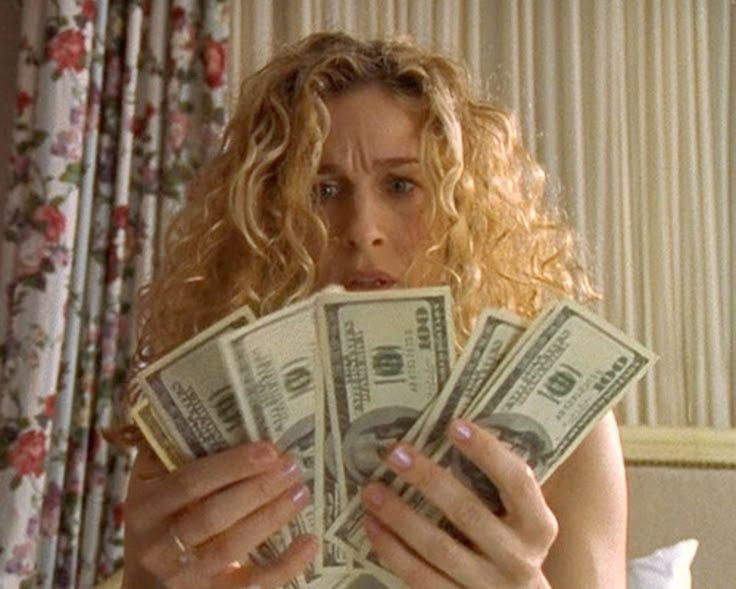
Estate sales are not antique malls. They’re not consignment stores with a corporate pricing policy and a manager who will call HR if you try to negotiate. An estate sale is, at its beating heart, a company trying to empty a house in three days — usually while the family is grieving, often exhausted, sometimes arguing about who got grandma’s Hummel figurines and who got stuck dealing with the public. The people running it are professionals, yes. But their entire job is to move things. All the things. By Sunday at 4pm.
Which means you, the person with cash in your pocket and a genuine desire to take that lamp off their hands? You have more power than you think. You are not a nuisance. You are the solution to their problem.
🏡 The Best NJ Estate Sales, directly to your Inbox:
Subscribe to Local Objects for just $2/week to get a curated list of the best sales in the NJ/NYC area right to your inbox! Plus I share bi-weekly tips to shop smarter & find the best deals.
Let’s be honest about why we don’t barter. It’s not that we think it’s wrong. It’s that we’ve been trained, in a thousand small ways, to find it embarrassing. To feel like we’re asking for something we don’t deserve. To assume the price on the tag represents some kind of truth we’d be rude to question. That if we make an offer and it gets rejected, the room will go quiet and everyone will look at us.
None of that is real. The estate sale workers have seen everything. They have watched people fight over a silk rugs. They have heard offers so low they laughed out loud, said no, and immediately moved on. Nobody is keeping a ledger of your attempted negotiations. You are not being judged. You are being helped.

The worst they can say is no, and then you put it down and go look at the silverware drawer like everyone else.
How To Actually Barter
Go on the last day. Arrive in the last two hours. This is the golden window. Prices are already marked down — most sales do 25–50% off on Sunday — and the workers are motivated. They don’t want to be the person who has to box up forty-seven coffee mugs and haul them to Goodwill. You are their way out. Use this. Walk in at 2pm on Sunday like you own the place, because in two hours, some of that stuff basically could be yours for nothing.
Bundle things. Always bundle. You want the lamp. You also kind of want that weird set of fondue forks. You don’t need the fondue forks. But you bundle them. “Would you take $40 for the lamp and the forks together?” is a wildly more powerful sentence than “would you take less for the lamp?” Bundling gives them a deal that feels like it’s working in everyone’s favor. It also moves more stuff. Which — the whole point for them.
Want to learn some tips & tricks for shopping? Read this:
Ultimate Guide to: Sourcing Like an NYC Vintage Seller

It was 4pm on a Saturday when I was sitting shotgun in my mom’s Jeep, waiting for her to return from inside the diner with our dinner for the night (a very NJ experience, IK). We had just spent the day travelling from estate sale to estate sale, looking for some fun vintage pieces to add to our collections — or in my case, my inventory pile. I’ve been a…
Make a specific, round, real number offer. Not “would you take a little less?” That’s agonizing for everyone and puts all the work on them. Not “$32.17” because that’s unhinged. Find a number that’s roughly 15–20% below the ask and say it plainly, like it’s the most natural thing in the world. “Would you take $30?” Full stop. No apology. No explanation. No “I know this might be too low but—” Just: thirty dollars. Said calmly. Then wait. The silence is not awkward. It’s just silence.
Cash helps. Saying you have cash helps more. Some estate sales take cards now, so this has lost some of its mystical power. But there’s still something about saying “I have cash” that feels decisive and real in a way a credit card swipe doesn’t. It signals you’re ready. You’re not browsing. You want the thing, you have the means, and the transaction can happen right now. Right now is a compelling offer. Just make sure the company takes multiple forms of payment before you try this.
Be a human being about it. Introduce yourself. Ask what something is if you’re not sure. Comment on something lovely about the house. These people are often in a tender situation — they’re liquidating someone’s life, and sometimes that someone was someone they loved. A little warmth goes a long way. Not as a manipulation tactic. Just because it’s decent. And also because people do nicer things for people they’ve had a small human moment with. That’s just true.
Accept no like a person who has heard the word before. Sometimes they say no. Occasionally an item is priced by the family and genuinely non-negotiable. Sometimes they’ve already had a higher offer and are holding. It doesn’t matter why. “No problem at all — thanks for checking” and then you move on. This is how bartering works when you do it correctly. You remain a person in good standing. You can even come back on Sunday.
How Not to Barter
Hand over cash and expect them to accept it. It’s rude and comes across as if you’re trying to manipulate them. You need to open the floor for negotiation, not close it off trying to get leverage.
Roll your eyes, grunt, and/or otherwise makes a scene. You’re an adult and other people at the estate sale will look at you. This is NJ we’re talking about after all.
Just be nice — it gets you a very long way.
I’ll tell you what the estate sale workers actually think when you make an offer: nothing bad. I’ve talked to enough of them. They think: is this reasonable? Can I make this call? Do I need to check with someone? And then they answer. That’s it. There’s no eye-roll happening when you turn away. There’s no story they’re going to tell their friends about the audacious person who offered $30 for a $48 lamp.
There’s just the next person walking in, holding a mixing bowl, working up the nerve.
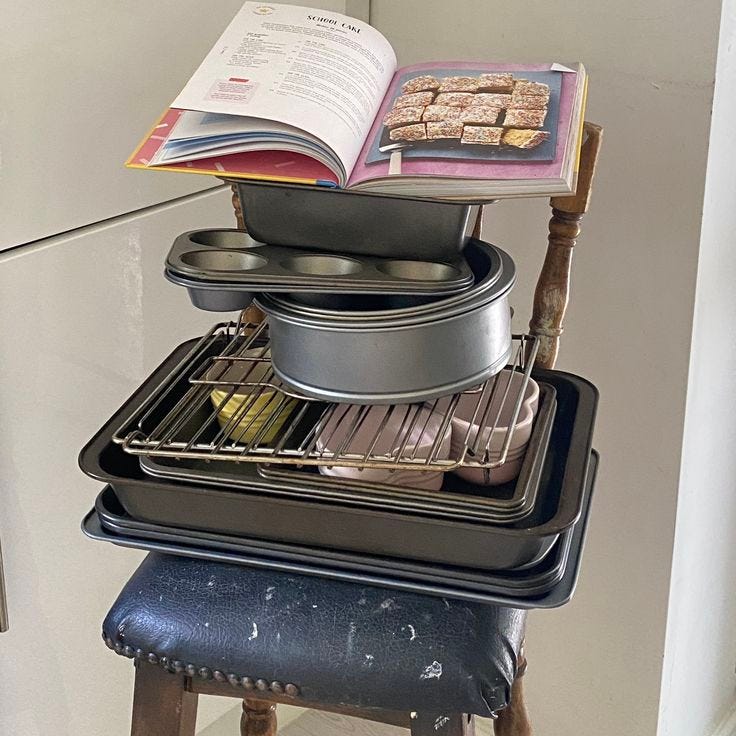
Be the person who already worked up the nerve. The lamp is right there. The price is negotiable. You’re allowed to ask.
Thanks for reading! Local Objects is a newsletter about secondhand things, where & how to find them, and what it means to want objects that have already had a life. It's free. Tell a friend who haunts estate sales.